How One Small Service Business Increased Bookings by 41% Without Spending a Dollar on Ads
Seizing Opportunity
No new ads were purchased. No marketing campaign was launched. The owner simply made this one change…
For service businesses, winter is more than cold weather and holiday cheer. It is a surge of opportunity.
From December through early February, demand spikes for a wide range of services. Families are hosting holiday gatherings. Friends are coming over to watch big games. Homes that have been quiet all year suddenly need to be ready for company.
In many industries this period becomes the Super Bowl of the season.
Phones ring more often. Customers are more urgent. And the businesses that respond first usually win the job.
But something interesting happens every year. Some companies ride this wave to record growth while others barely notice the difference. The opportunity is the same. The outcome is not.
A Local Business Breaks Through
One small service company in my area learned this lesson the hard way.
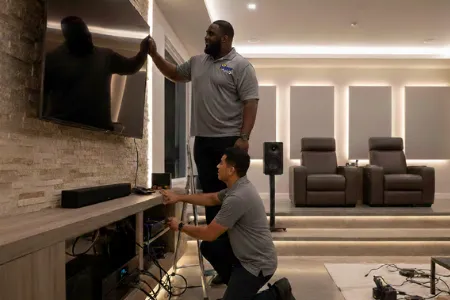
The business installs and mounts televisions. Nothing flashy. Just solid work and a steady reputation in the community. They had great reviews online, clean branding, and referrals from past customers.
Yet growth had stalled.
Every year the holidays would come. Every year demand would rise. But the business never seemed to capture as much of that demand as it should.
Then something changed.
Between December and February last year, booked jobs jumped 41 percent compared to previous seasons.
The surprising part was what did not change.
No new marketing campaign.
No price adjustments.
No new employees.
The only thing the owner changed was how incoming calls were handled.
Pinpointing the Source of Lost Revenue
Like most service professionals, the owner spent most of his day in the field.
He was climbing ladders, lifting televisions, running cables through walls, and troubleshooting installations. When a phone rang, he often could not reach it. Sometimes he was on a ladder. Sometimes his hands were full. Sometimes the signal inside a home was weak.
Calls went to voicemail.
By the time he finished the job and called the customer back, the same thing had already happened dozens of times before.
The customer had moved on.
Homeowners looking for TV installation are rarely patient shoppers. They want the job done today or tomorrow. If the first company does not answer, they simply call the next one on the list.
It is not personal. It is urgency.
The owner eventually realized something important. The problem was not demand. The problem was the first five minutes after the phone rang.
That short window determined whether the job was captured or lost.
The Five-Minute Problem
Research across service industries consistently shows that customers move quickly when they cannot reach someone. When a call goes unanswered, many people simply call the next company listed on Google.
By the time a contractor returns the call, the job is often already booked.
This owner realized he was not losing work because he lacked skill or reputation. He was losing work because he physically could not answer every call while doing the work itself.
And during the holiday rush, that problem becomes magnified.
Customers are hosting parties. Friends are coming over for games. New televisions have just been purchased. They want the installation done immediately.
If someone answers, they book.
If no one answers, they move on.
The Simple Fix
Instead of trying to juggle calls while on ladders, the owner implemented something surprisingly simple.
An AI receptionist.
Now when a customer calls, the phone is always answered immediately. The caller is greeted, asked a few simple questions about the job, and offered available time windows.
Appointments can be scheduled on the spot.
If the caller prefers, they can receive a confirmation by text or email. The owner still does the work himself, but the business never sounds unavailable anymore.
From the customer’s perspective, the company is responsive, organized, and easy to work with.
From the owner’s perspective, nothing about the job itself changed. He simply stopped losing calls.
The Quiet Advantage
What happened next was not magic. It was math.
More calls were answered.
More conversations happened.
More jobs were booked.
That single operational change turned a busy season into a record season.
And the lesson extends far beyond TV installation.
Plumbers are under sinks.
Roofers are on rooftops.
Electricians are inside panels.
Landscapers are operating equipment.
The same pattern exists across the trades. The person doing the work is often the same person expected to answer the phone.
The companies that solve that gap gain a quiet advantage.
Every answered call becomes an opportunity.
Every missed call becomes a lost one.
Lessons for Every Service Business
The story of this local business is not really about televisions. It is about responsiveness.
Customers today expect immediate answers. When they search for a service provider, they are often ready to book right away. The company that answers first usually gets the job.
If you run a service business, try a simple exercise this week. Look at your last two weeks of call history. Count how many calls went unanswered. Then be bold enough to call a few of those numbers back and ask if they ended up booking with another company.
Now do the math.
How much revenue slipped through the cracks simply because no one answered the phone?
I asked myself the same question in my own general contracting business. After installing an AI receptionist to handle incoming calls, my business grew by 20 percent in 2025. Not because I worked more hours, but because fewer opportunities were missed.
If you are curious about how this works, visit my website and speak with my AI receptionist. You can experience it for yourself and even book a quick chat with me if you have questions.
The future of service businesses is not just working harder. It is working smarter with the help of AI.
Let’s move into that future together.
